
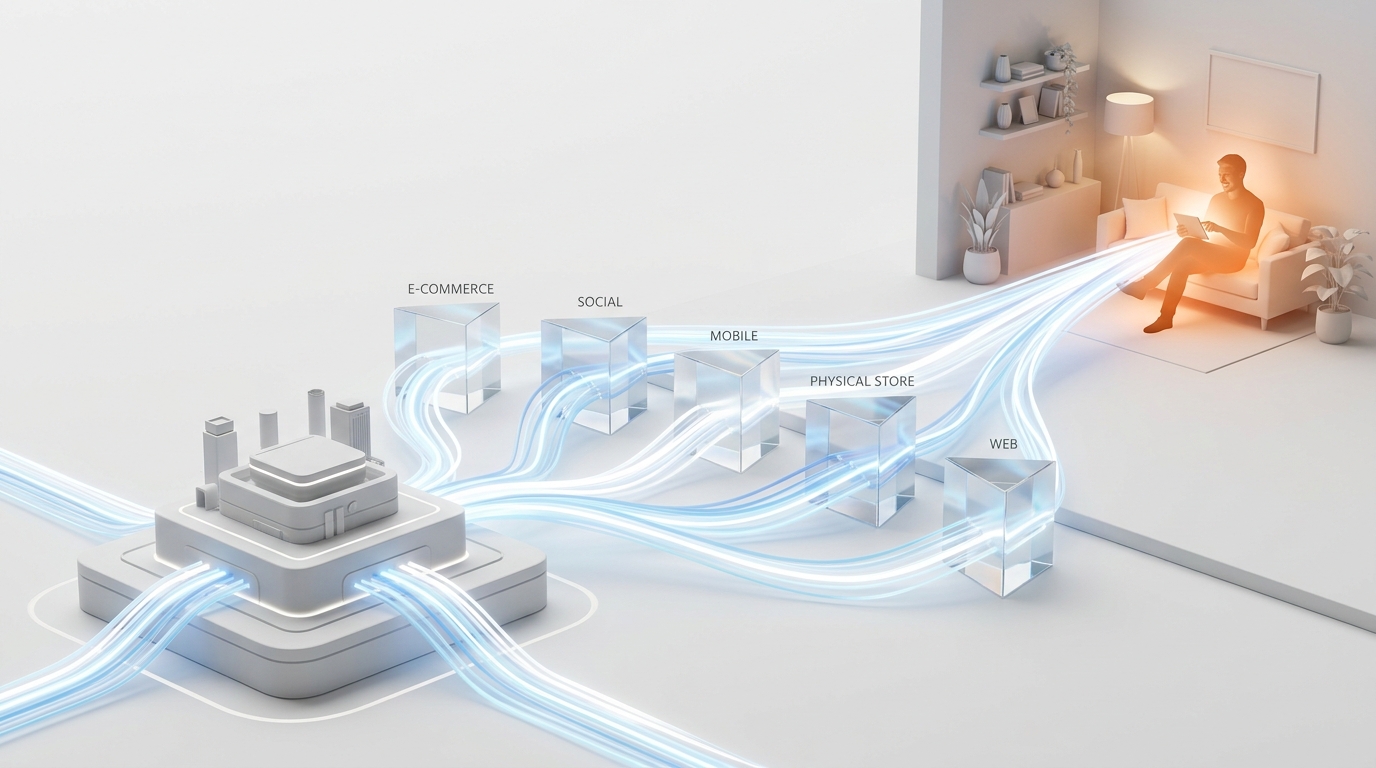
When you manufacture products that reach consumers through retail channels, the relationship, and the data, belongs to someone else. Here is how to change that.
You make the product. A distributor buys it from you. Retailers stock it. A consumer takes it home. By that point, you know almost nothing about who bought it, why they chose it over the competitor on the shelf next to it, or whether they are satisfied six months later.
This is the structural problem facing almost every producer that sells through an indirect channel. Your sell-in numbers tell you what left your warehouse. They tell you nothing about sell-through, what actually moved from the shelf, and even less about the person who moved it.
For years, this was simply accepted as the cost of working through intermediaries. Today, it is a strategic liability.
Why This Is a Strategic Liability Now
Digital-native competitors entering your category have one structural advantage over you: they know their customers. Every purchase, every interaction, every return is a data point they own. You, selling through several layers of intermediary, are effectively flying blind by comparison.
Meanwhile, your retailers are sitting on that data and, understandably, have no particular incentive to share it with you. From their perspective, the end-user relationship is their margin protection. That is a rational position for them. It is a strategic problem for you.
What Actually Works
In our experience, three approaches deliver reliable results for producers in this situation.
1. Value exchange at the product level
The most effective mechanism is embedding a reason for the end user to identify themselves directly to you, and making that reason genuinely worthwhile. Extended warranty registration, access to exclusive technical content, a spare parts programme, or priority support are all examples where the consumer's interest and yours align. The QR code on the packaging or in the box is the entry point; the value must be real enough that they use it.
The mistake most producers make is treating registration as a legal or logistics formality. It should be treated as the first step in a customer relationship. That means designing the post-registration experience with the same care as the product itself.
2. Working with retailers, not around them
Going around your retail partners to reach their customers is a fast way to damage a channel relationship you depend on. A more sustainable approach is to design programmes that your retailers can participate in and benefit from: co-branded loyalty mechanisms, joint data-sharing agreements with mutual upside, or technical support services that reduce retailer after-sales burden while giving you the customer contact.
This requires treating your retail partners as strategic stakeholders in the data conversation, not as obstacles to be circumvented. The conversations are harder. The outcomes are more durable.
3. Post-purchase signals as a proxy
Where direct registration is not feasible at scale, indirect signals can be systematically collected: warranty claims, spare parts orders, customer service contacts. Each is a touchpoint that, properly captured and analysed, begins to build a picture of your installed base and usage patterns. It is not the same as first-party CRM data, but for many producers it is the data that already exists and simply is not being used.
The Harder Question
Building a first-party data asset in an indirect channel model requires someone to own the problem. In most organisations we encounter, it sits in a gap between sales (who manage the channel relationship), marketing (who want the data), and IT (who build the systems). Progress happens when a single accountable owner is assigned: typically a commercial or marketing leader with the mandate to cut across those silos.
The technical infrastructure to support this is rarely the constraint. The organisational alignment to make it happen usually is. That is where the real work begins.
If this is a challenge you are navigating, we are happy to think it through with you.
Channel strategy and indirect sales are a core part of our marketing management and business consultancy work: see what else we cover.